




Table of Contents
ToggleFruit flies are tiny, relentless pests that seem to multiply overnight once they find their way into your home. Unlike other household insects, fruit flies aren’t a sign of poor housekeeping, they’re simply drawn to fermented foods, moisture, and organic matter. One overripe banana or a forgotten glass of wine is all it takes for dozens of flies to establish a breeding colony in your kitchen. The good news? You can eliminate them completely with the right combination of source elimination, cleaning, and DIY traps. This guide walks you through how to get rid of fruit flies efficiently, so you can reclaim your kitchen and prevent future invasions.
Key Takeaways
- To get rid of fruit flies effectively, identify and eliminate their food sources first—overripe fruit, vegetable waste, and organic buildup in drains are the primary breeding grounds.
- A thorough kitchen deep clean, including areas under appliances and drain systems, removes breeding sites and is essential since traps alone won’t work without eliminating the environment that supports them.
- DIY traps using apple cider vinegar (with a drop of dish soap) or fermented beverages are highly effective and inexpensive, and should be refreshed daily for maximum results.
- Store produce in the refrigerator or sealed containers and maintain consistent habits—regular trash disposal, drain cleaning, and immediate removal of overripe fruit—to prevent future infestations.
- Most fruit fly problems resolve within one to two weeks of consistent effort, but contact a pest control professional if flies persist after 10-14 days, as they may be a different fly species requiring specialized treatment.
Identify The Source Of Your Fruit Fly Problem
Fruit flies don’t materialize out of nowhere, they’re drawn to specific food sources and damp environments where they can breed. Your first step is pinpointing where they’re congregating and what’s attracting them.
Start by checking obvious hotspots: your fruit bowl, pantry shelves, and any loose produce left on countertops. Bananas, avocados, and stone fruits ripen and rot quickly, creating a breeding ground within days. Don’t overlook vegetables either, potatoes, onions, and tomatoes that have started to soften are equally attractive to flies.
Look under and behind appliances. Fruit flies thrive in dark, moist spots where spills accumulate and go unnoticed. Check the area beneath your coffee maker, toaster, microwave, and the sides of your refrigerator. Also inspect your garbage and compost bins, trash can liners for leaks, and recycling bins, sticky residue from rinsed bottles or cans is a magnet for flies.
Don’t forget your drain system. Kitchen sink drains, garbage disposal residue, and even your shower drain can harbor organic buildup where fruit flies breed. If you notice flies coming from a specific drain, that’s your culprit. Once you’ve identified the source, you’re ready to eliminate it.
Eliminate Food Sources And Clean Your Kitchen
With the source identified, it’s time for a thorough kitchen overhaul. This step is non-negotiable, you can trap flies all day, but if food remains, they’ll keep breeding.
Handle your produce immediately. Eat ripe fruit within a day or two, refrigerate what you can, or throw away anything soft, bruised, or fermenting. Wash produce as soon as you bring it home, except berries, which mold faster when wet. Don’t store fruit on the counter unless it’s genuinely under-ripe.
Sealing and emptying your trash is critical during an infestation. Use trash cans with tight-fitting lids and empty them daily, not weekly. Rinse all recyclables, bottles, cans, jars, before putting them in bins. Flies can breed in sticky residue left inside containers, so a quick rinse makes a huge difference.
Now clean thoroughly. Wipe down all countertops, sweep the floor, and pay special attention to sticky spills and crumbs. Get behind and under appliances where debris accumulates. Use hot water and a degreaser if spills have hardened.
For your drains, boil a kettle of water and pour it slowly down the sink while scrubbing the drain strainer with a brush. For stubborn buildup, cleaning tips often recommend flushing with a bacterial drain digester, which breaks down organic matter where flies breed. Do this for all drains in your kitchen. If your garbage disposal still smells, grind ice cubes and lemon peels to freshen it up.
This deep clean removes breeding sites and food sources. It’s the foundation of getting fruit flies under control, traps alone won’t work if the environment still supports them.
Use DIY Traps And Baits
Now that you’ve removed their food sources, DIY traps will catch the remaining flies. The beauty of these methods is they’re inexpensive, effective, and use items you likely have at home.
Place traps wherever you’ve seen fly activity, near fruit bowls, under sinks, and in corners of your pantry. Refresh the bait daily, especially if it’s collecting dead flies. A fresh trap works faster than a full one.
Apple Cider Vinegar Trap
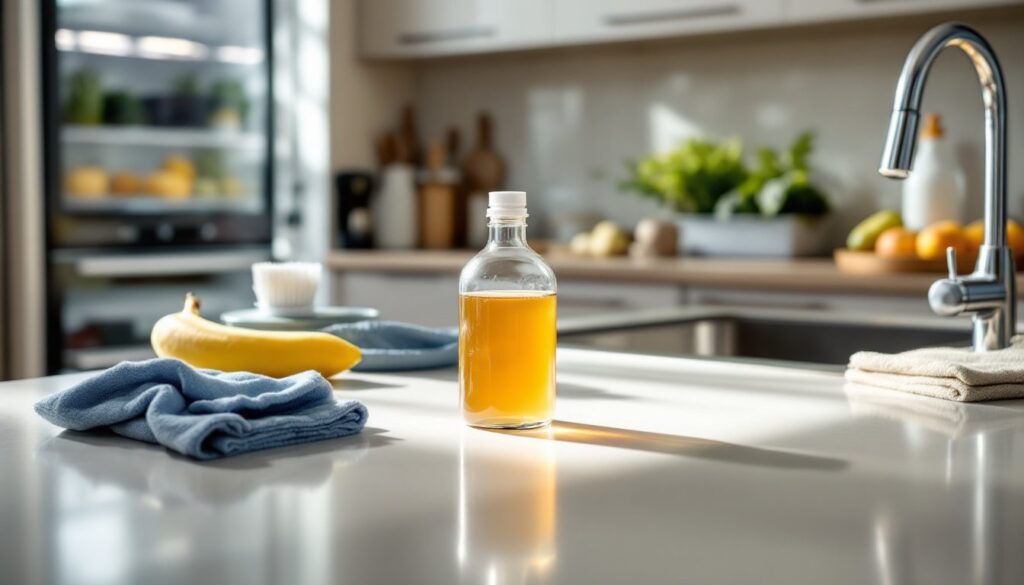
This is the gold standard for fruit fly control and backed by pest management professionals. Apple cider vinegar works because the smell mimics fermenting fruit, exactly what attracts flies.
What you need:
- Small bowl or glass jar
- Apple cider vinegar
- Dish soap (just a drop or two)
- Plastic wrap and rubber band (optional but recommended)
Fill your bowl or jar about two-thirds full with apple cider vinegar. Add 2-3 drops of dish soap, this breaks the surface tension so flies sink and drown instead of landing on the surface and flying off. If you want to slow down the escape rate, cover the jar loosely with plastic wrap, secure it with a rubber band, and poke 4-5 small holes with a toothpick. Flies can enter but struggle to find their way back out. Replace the trap every 2-3 days or when it’s full of dead flies.
Wine Or Beer Trap
Fruit flies also love fermented beverages. This trap works just as well as vinegar for many infestations.
Pour an inch or two of red wine, white wine, or beer into a glass or jar. Leave it uncovered, or cover it with plastic wrap and poke small holes. Some people create a paper cone and insert it into the jar opening, flies enter the cone easily but can’t find their way back out. This method is especially effective if you’re already dealing with a mild infestation. Change it out daily or every other day.
Alternatively, try placing a piece of overripe fruit or banana in a jar, cover with plastic wrap, poke holes, and use it the same way. Some households also report success with juice or a mixture of vinegar and fruit juice. The key is offering something that mimics a breeding site, fermented fruit and sweet liquids are irresistible.
Prevent Future Infestations
Once you’ve eliminated the current infestation, preventing new ones is straightforward with consistent habits.
Store most of your fruit and vegetables in the refrigerator or in sealed containers. This single change eliminates the most common breeding ground. Keep your fridge at a temperature that slows ripening, around 35–40°F for most produce. Discard overripe fruit immediately: don’t let it sit “just one more day” in the fruit bowl.
Maintain clean trash, compost, and recycling habits year-round. Use bins with tight-fitting lids, rinse containers before storing, and empty garbage regularly. A simple habit of wiping your counter after meals and loading dishes into the dishwasher right away prevents the accumulation of spills and crumbs that attract flies.
Clean your drains monthly. Pour boiling water down the sink, scrub the drain opening with a brush, and consider using a drain digester every few weeks. Kitchen organization strategies include designating a “compost corner” with a sealed container, which keeps organic waste contained and away from open air where flies can detect it.
Some people report success with natural repellents, lemongrass oil, lavender, basil plants, cedar chips, or cinnamon sticks placed near problem areas. These haven’t been scientifically validated to the same degree as elimination and trapping, but they’re worth trying if you’ve had recurring issues. Cedar chips in drawers or a small vase of fresh basil on the windowsill might discourage flies naturally.
When To Call A Professional
Most fruit fly infestations resolve within a week or two of consistent effort. But, if you’ve eliminated food sources, cleaned thoroughly, set traps, and still see flies after 10-14 days, it’s time to call a pest management professional.
Professionals can identify the fly species, sometimes what you think is a fruit fly infestation is actually drain flies or phorid flies, which require different treatments. They’ll also locate hidden breeding sites you might have missed, such as a slow drain, a crack in the wall, or a window seal where organic matter has accumulated.
If you suspect a structural issue, a sewage leak, standing water behind walls, or significant plumbing problems, definitely bring in an expert. These situations need professional inspection and repair, not just pest control.
Home organization and cleaning guides also discuss when outsourcing pest management makes sense, especially for those working full-time or managing large households where consistent daily cleaning isn’t feasible. A professional treatment can break the cycle and reset your environment so you can maintain control going forward.